Marketing in motion: insights from the Tribe Global Business Summit 2026
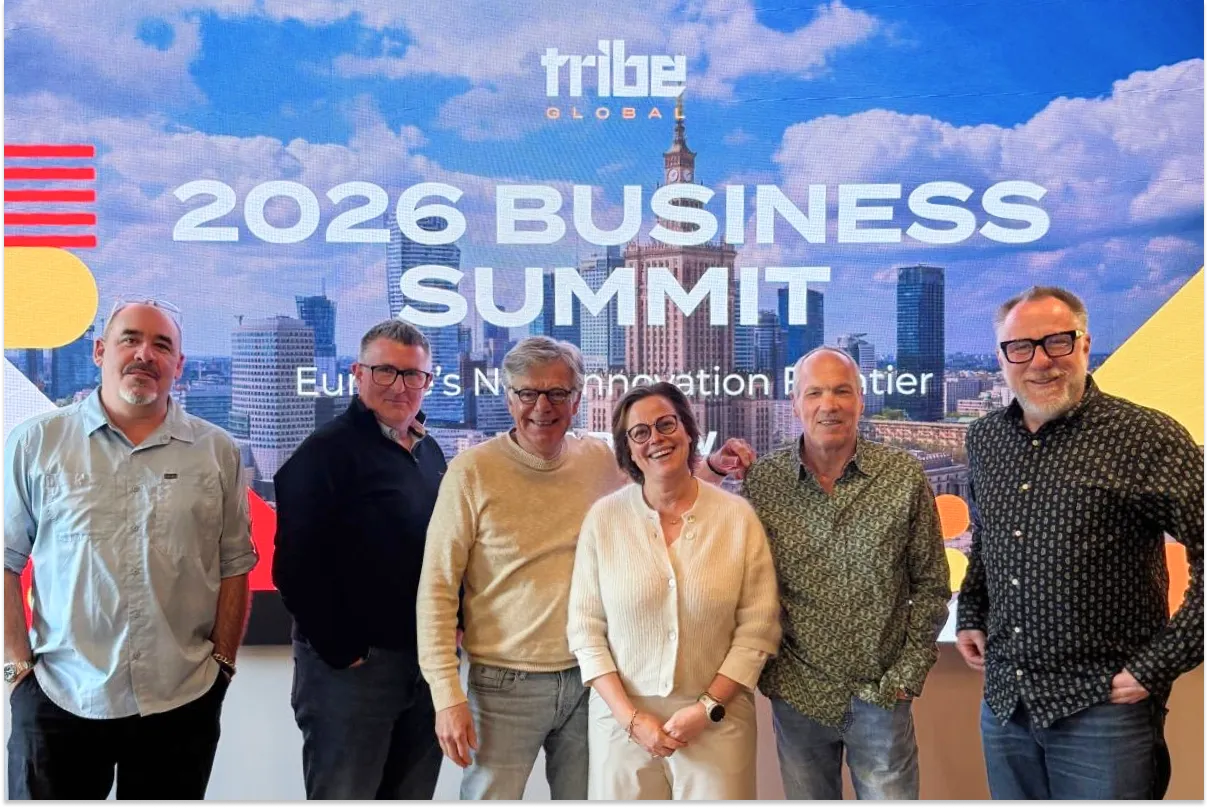
Advertising and communication agencies from over a hundred cities gathered in Warsaw in April for the Tribe Global Business Summit 2026. The aim was to exchange ideas and keep each other on their toes in times of change. Comma was represented by founder Greetje Demuelenaere (in her dual role as CEO of Comma and Managing Director of Tribe Global) and media and production marketer Margaux de Ruiter.
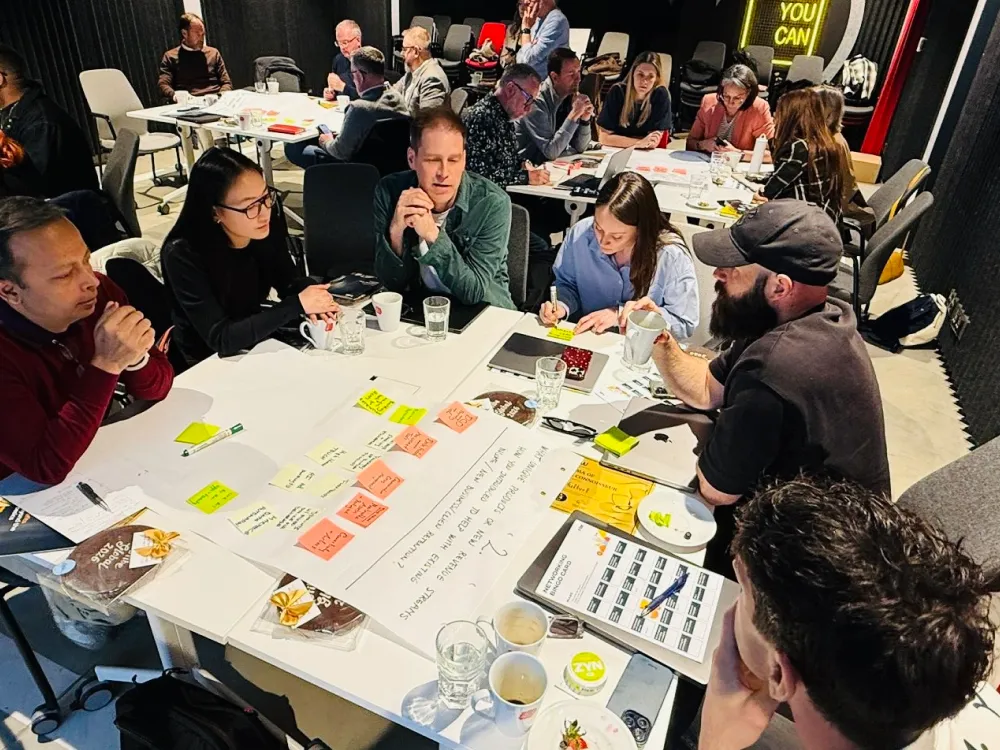
High on the agenda was one of the most pressing questions facing the sector today: how are agencies adapting to change? The Business Summit generated open, honest discussions and shared ideas on many topics, from evolving services and processes to pricing models. This yielded valuable conversations that highlighted challenges and innovative approaches.
Agility, an asset in a changing, challenging market
The summit kicked off with a discussion on the impact of economic and geopolitical events on our business confidence and international decision-making. For some markets, these events are leading to postponed decisions, paused campaigns and budgets that are suddenly frozen. Others report little direct impact so far, but acknowledge the potential for long-term consequences.
What stands out is the shared pragmatic response from the Tribe Global innovators: we must adapt and move along. This means, amongst other things, diversifying portfolios, exploring new markets and, above all, keep focusing on sustainable customer relationships. Agility, planning and clear communication have become indispensable competencies for any brand that seeks to hold its own in an evolving market.
From visibility to business impact
So how do we remain relevant as a brand? Don’t think you should constantly be chasing the next big media trend, but build on existing trust. If that foundation is solid, your customer relationship acts as the lever for success. Not because you produce more, but because you collaborate more strategically.
The entire customer journey plays a more important role than ever: growth stems from understanding and activating every stage, from the initial discovery to post-purchase service. This is how you make your marketing more targeted: what do your efforts in each specific stage actually deliver and how do you adjust your approach?
AI adoption requires vision
These days, AI inevitably influences your marketing and, as such, raises the question of how consciously you engage with it. In 2026, the Tribe Global network compiled its Global AI Tooling Index of no less than 179 tools that the agencies are currently using. That figure says a lot about the speed of adoption, but also about its complexity; an evolution that advertising agencies and brands are struggling to keep up with.
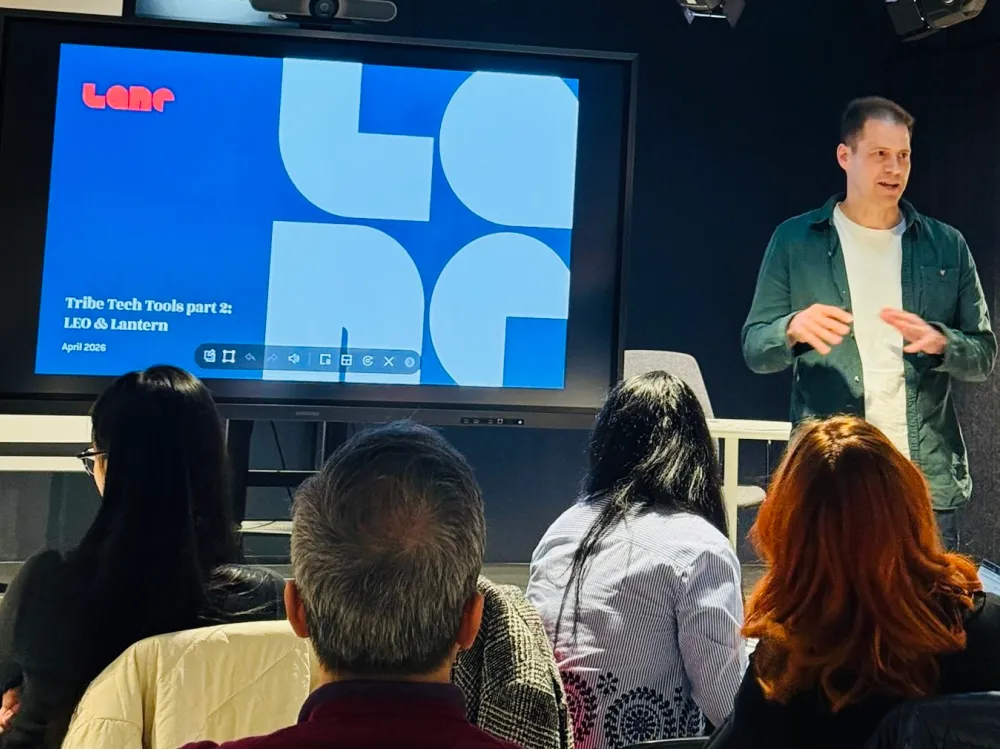
The strategic analysis presented at the summit by Ian Duncan and Barry Fearn from advertising agency Lane brings this observation into even sharper focus. They argue that production costs are falling, production speed is rising and the minimum quality standard is shifting at breakneck speed. Competitive advantages shift from pure execution to taste, pattern recognition and strategic judgement. In a market where AI enables ever-greater output, human interpretation and contextual insight are becoming all the more valuable.
This brings us to warning about AI slop – generic content produced on a massive scale that lacks substantive depth. As a result, the ability to stand out in marketing is becoming increasingly dependent on accumulated knowledge, a consistent brand vision and strategic insight tailored to the brand or company.
The rise of GEO (generative engine optimisation) is forcing us to adapt too. Success is no longer just about a high ranking in traditional search engines, but it’s also about how AI systems interpret your brand value. In this new landscape, the quality, depth and credibility of your content are more vital than ever.
Quality trumps volume
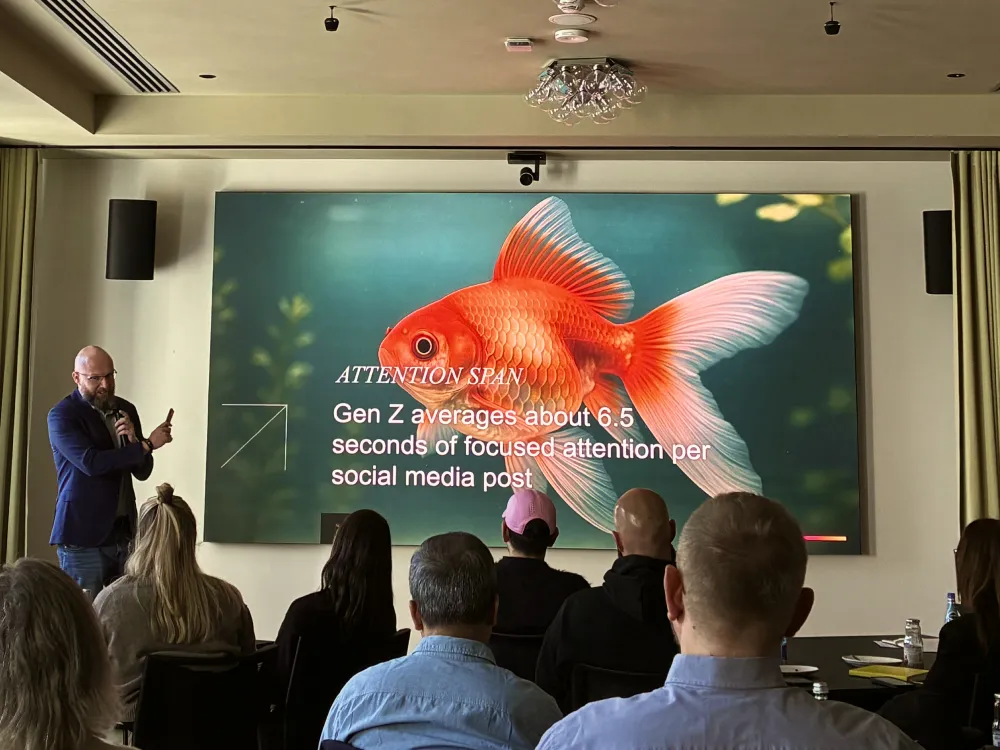
Consumers see thousands of adverts every day but often only register a fraction of them. At the summit, Blake Seabrook and Thomas Hartman from Readpeak explained how this poses a fundamental challenge for your advertising: buying more visibility no longer equates making a bigger impact. The focus is shifting from volume to relevance, from shouting the hardest to standing out more distinctly.
Native advertising is a practical example of this. It involves paid content that fits seamlessly into the context in which it appears and genuinely forms part of the user experience, rather than causing an interruption.
This shift towards relevance also opens up fascinating possibilities within market research. During the summit, speaker Kwame Ferreira talked about to AI-based target audience models or synthetic users. These simulations can replicate real interview flows based on deep behavioural and psychographic layers. While they do not replace human research, they can serve as a powerful discovery co-pilot to test hypotheses more quickly, refine messaging and uncover strategic insights faster.
Storytelling also remains one of the most powerful quality tools, according to Jacek Warcowski of advertising agency RASP. Technology is constantly changing, but storytelling remains fundamentally human. Brands do not always need to play the leading role to make an impact. Those that succeed in making experiences personal, relevant and memorable create engagement and long-term brand value.
Your data reveals more than dashboards show
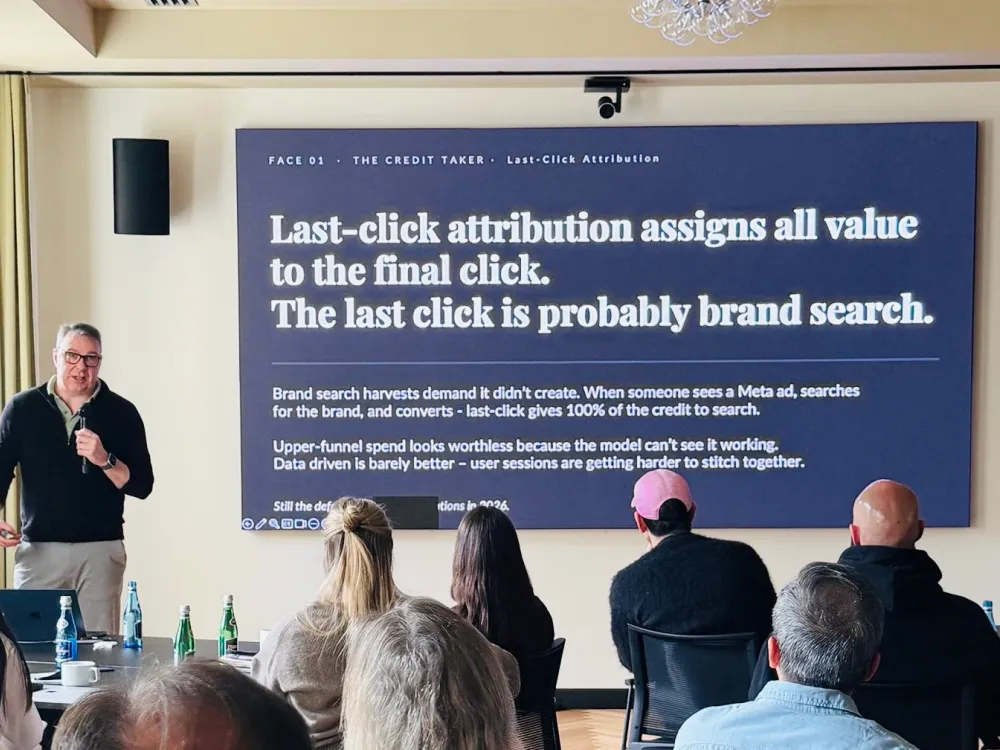
Paul Newnes, co-founder of Deducive, was pretty clear about marketing measurement: today, many marketing decisions are made on the basis of incomplete or misleading data. Traditional last-click attribution, where the final advert before a purchase takes all the credit, systematically gives a distorted picture of your advertising. Campaigns that generate the initial demand in the upper funnel are consistently underestimated. Every platform claims conversions according to its own logic. The distinction between a performance issue and a measurement issue is crucial yet too often overlooked.
Without the right design and interpretation, a dashboard offers nothing but false certainty. The trick is to interpret data from a strategic perspective and to dare uncover the underlying nuances. Only when you move beyond the mere reporting of figures and translate them into business decisions does data deliver the right added value.
Trusted partners matter most
Underlying all the discussions about AI, storytelling and marketing measurement was a shared conviction: agility is a powerful competitive advantage. However, the key takeaway from the Global Business Summit 2026 was, above all, that “Commercial models matter, but trusted partnership matters more.” For any marketing approach, this means working with an advertising agency that doesn’t merely carry out tasks but thinks alongside clients about the future. One that goes beyond trends and translates anything that is relevant to your brand, your sector and your customers. That is exactly what drives Comma, day in, day out.
Comma, brand strategists, is part of Tribe Global, a global network of independent advertising agencies operating in more than 100 cities worldwide. Interested to discover how the summit’s insights could be translated into your marketing approach? We’ll be happy to think along with you.