Advertising in ChatGPT starts August 24, 2026. Will your brand be there when decisions are made?
ChatGPT used to be a handy tool for looking something up or asking for advice. By now, it has grown into something more fundamental: a place to plan trips, compare software, furnish a house, or weigh a big purchase. And let's not count the times it played therapist at 2am 👀... People no longer type in a couple of keywords, they have an entire conversation: about what they want, what matters to them, and where their doubts lie. Right there, in that conversation, OpenAI is now introducing advertising.
From August 24, ChatGPT ads are available in 31 European markets, Belgium included. Six months after OpenAI began testing in the United States, the model is making its way over here. That's no small thing for the advertising world. ChatGPT has become a Google alternative for many people. And naturally, wherever people are actively searching, marketing wants to be present too.
From small-scale pilot to a full European launch
OpenAI built out its advertising capability step by step. A pilot launched in the United States in February. Eight more markets followed, and now the leap to Europe is a fact. Access initially runs through the OpenAI Ads Solutions team, media agencies, and technology partners. Self-service via OpenAI's own Ads Manager will follow later this quarter.
🚨 Update: Selfservice in Belgium is live since September 1, 2026.
American advertisers therefore have about a six-month head start. That's nowhere near enough to speak of best practices, let alone ready-made answers. It does give us a first look at how this platform behaves at this very early stage: enough to start with sharper expectations.
Who actually sees ChatGPT ads?
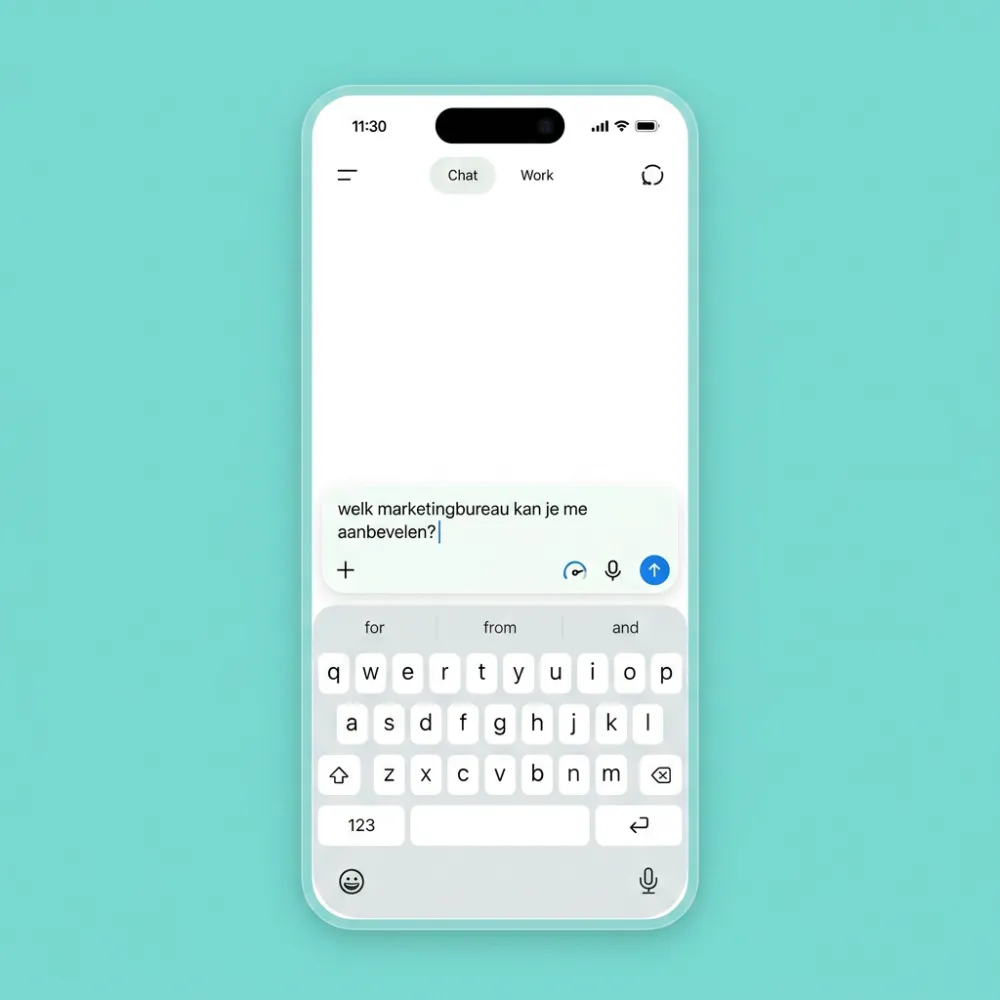
Worth flagging: ads only show up for users on the free version of ChatGPT. OpenAI stresses that ads are clearly recognizable and separate from the chatbot's actual answers. They shouldn't color the answer itself, only the space around it.
What the first American advertisers are already teaching us
The experiences from the US paint a picture of where things stand: an ad channel with real potential, still very much in its infancy.
First, the good news: about 95% of ChatGPT users are still on the free version. So most of the audience is actually reachable. Competition is also still limited: where Google and Meta count hundreds of thousands of advertisers, ChatGPT is dealing with a few thousand. That keeps cost-per-click low and the barrier to entry accessible, with minimum daily budgets that have since dropped to a few dozen euros.
Don't treat ChatGPT ads as the little sibling of Meta or Google Ads. People aren't scrolling here the way they do on social, and they're not searching with the same functional intent as on Google either. They're there to understand something or weigh their options. Play into that by showing up at the right moment in the conversation, more like contextual display advertising. A disruptive interruption simply doesn't work here.
How you can (barely) target on ChatGPT
The technical reality is pretty thin for now. One headline (already truncated after 24 characters), one description, one image per ad. Targeting works through "context hints" instead of classic keywords, and those hints aren't always followed: advertisers see their ads show up in conversations that have little to nothing to do with their industry (a nod to Google's broad match? 😊). Targeting by city, region, or device doesn't exist yet. And the biggest shortcoming: advertisers get almost no insight into exactly which conversations their ad appears in. Steering on data is difficult for now, and brand safety is largely a matter of trust.
How to approach advertising on ChatGPT the smart way
- Fill in "context hints" as a neat list of keywords, the way you're used to on Google, and the results will disappoint. American advertisers who turned them into flowing sentences instead saw better results, a bit like explaining something to a colleague rather than typing out a list of terms.
- The same logic applies to the ad copy itself: copy that speaks to a concrete pain point of the reader tends to perform better than copy that simply lists a product.
- In a conversation, a message that picks up on what someone just said simply beats a classic product pitch.
- One more practical consequence: you only get one headline and one description per ad, while Google or Meta automatically test countless variants against each other. So launch several separate ads right away and see for yourself which one wins.
- The bidding system has its quirks too. Almost every ad group keeps getting a notice that bidding higher guarantees "strong delivery", even when a lower bid is already performing just fine. Follow that advice blindly and your costs mainly go up, without results growing proportionally. To make up for that lack of insight, third-party monitoring tools like Adthena and Peec have popped up in the meantime. They show which conversations your ads appear in and how competitors are approaching things: insights OpenAI itself doesn't share, but around which a small market is quietly starting to grow.
Who don't you reach (yet)?
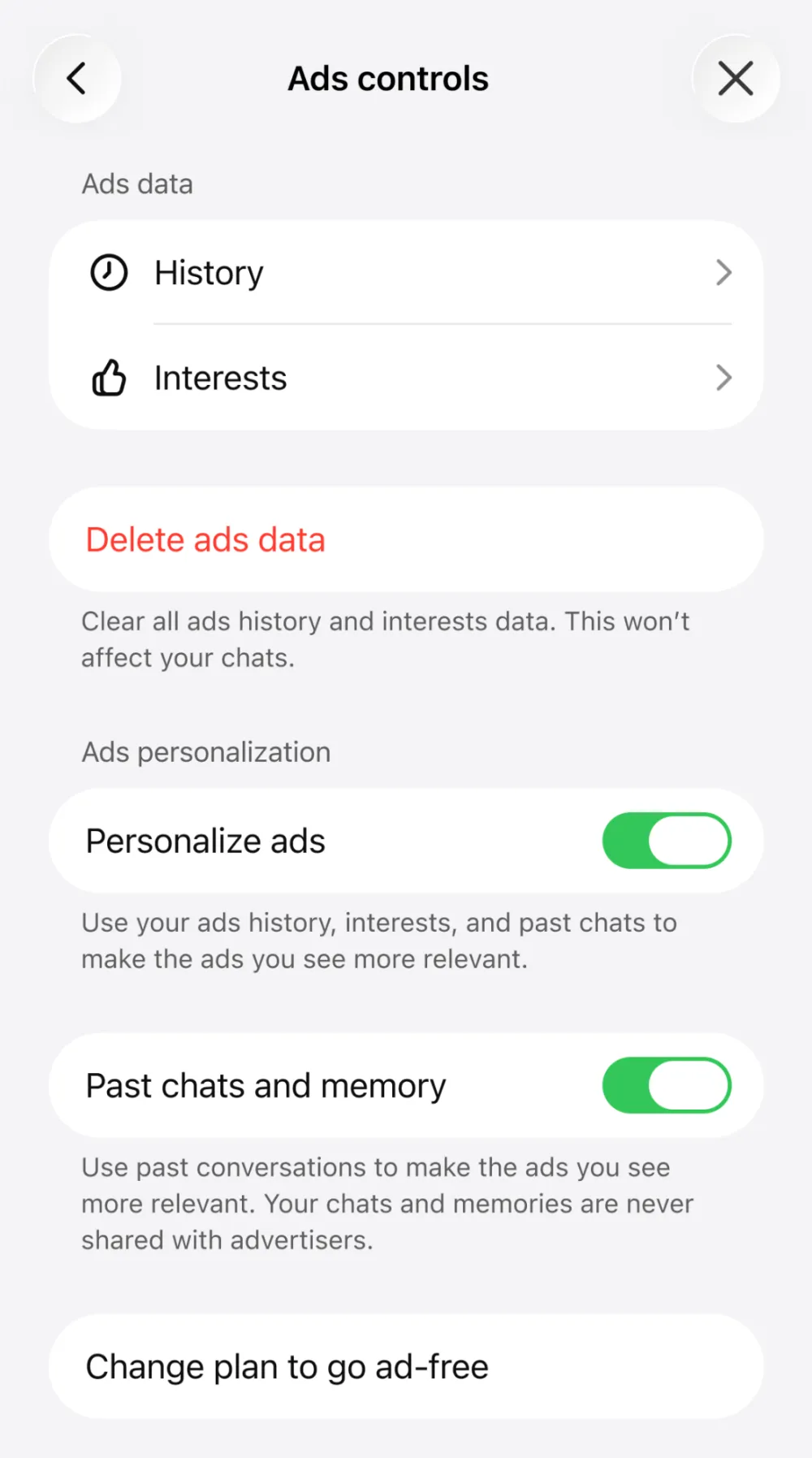
Especially relevant for B2B brands: only free-version users see ads. It's precisely the business decision-makers and heavy users who often sit on a paid plan, and they stay out of reach through ads. Some brands won't mind that much: less noise, less wasted budget. Brands that specifically want to reach that premium audience are better off focusing on organic visibility for now.
A spike, then quiet
Another thing that stands out: a strong initial spike in leads at launch, followed by a drop-off. Why that happens isn't clear yet. It's likely some form of creative fatigue at play, similar to what we know from other platforms. For now, ChatGPT is mainly a channel to test, with modest budgets and modest expectations. Throwing all your money at it right away would be money down the drain.
Opportunities versus risks
The opportunity is real: less competition, people in a genuine decision-making moment, and a position as an early mover in a channel that will undoubtedly get more expensive and more crowded as it matures. Testing and learning now pays off as a head start later.
The risks are just as real. Reporting is essentially non-existent, targeting is vague, and brands have barely any control over the context their message appears in. TBWA CEO Kris Hoet also points to a subtler risk: as people see more advertising popping up between ChatGPT's answers, trust in those answers itself could erode. It's a dilemma OpenAI itself is aware of: its own advertising principles stress that trust is the foundation of this whole story. Ads must not undermine that trust.
There's also a bigger question that reaches beyond the platform itself. Karel Vinck of Defiant voices the fear shared by many in the advertising industry: that this budget will come at the expense of local media, the channels that show less immediate results but do contribute to long-term brand building. We recognize that tension. Jumping quickly on the latest hype feels tempting, but it undermines a healthy media mix, and that mix is exactly what keeps a brand strong in the long run.
Being findable in AI: with or without ads
When did you last discover a (new) brand in a list of search results? Increasingly, it happens in a convo, with ChatGPT as advisor or sounding board. That kind of presence you can simply buy today, but there's also a second road that leads to Rome.
At least as important: appearing organically in the answer itself. Brands already putting in that work today aren't visible by accident. They make sure their knowledge, expertise, and story reach exactly the places AI models pull their answers from. Paying to be seen, earning to be found: two sides of the same question. How does your brand stay relevant at the moment someone actually makes a decision?
At Comma, we're happy to think this through with you. Not sure if, where, or how your brand should become visible in AI conversations? Feel free to get in touch 👇.
Only users on a Free or Go plan are eligible. Plus, Pro, Business, Enterprise, and Edu stay ad-free, as do accounts recognized as belonging to minors. For B2B brands, that's worth keeping in mind: the very users who tend to be on a paid plan aren't reachable through ads today.
No. Ads run on a system that's separate from the chat model itself. An advertiser cannot steer, rewrite, or boost the ranking of ChatGPT's answer. The ad appears separately, clearly labeled as "sponsored," below the answer.
Below a ChatGPT answer, whenever the system detects a relevant match with the conversation. One ad block can show multiple items, from you or from other advertisers. Ads currently don't appear in the ChatGPT Atlas browser.
The system takes into account the context of the conversation, your ad's landing page and copy, your "context hints," and, if personalization is on, certain signals from the user's broader ChatGPT experience. When multiple ads are eligible, a combination of relevance and bid decides which one appears first, through a second-price auction.
You pay per thousand impressions (CPM) or per click (CPC), with a maximum bid set at the ad group level. For CPC campaigns, OpenAI recommends a starting bid of $3 to $5 per click. There's also an automatic bidding strategy, "Maximize Results," which optimizes within your budget for the goal you choose, without a guarantee on a fixed cost per result.
That depends on where you're located. Ads Manager Beta reports on impressions, clicks, spend, CTR, average CPC/CPM, and conversions, but for Belgium it's still listed as "coming soon." As long as you don't have direct access to Ads Manager, measurement runs through your media agency or technology partner, or through UTM parameters on your landing pages, so you can at least track traffic in your own analytics tools.
Register your interest via openai.com/advertisers or through Comma. Today, access still runs through the OpenAI Ads Solutions team, media agencies, or technology partners; self-service through OpenAI's own Ads Manager will follow later this quarter.
In this article
By Tamara Plancke, performance marketeer Comma, brandstrategists
Comma guides brands in their presence across search engines and AI conversations. From strategic research to performance marketing: we translate insights into concrete choices around visibility, targeting, and content.