Change with the outlaw archetype
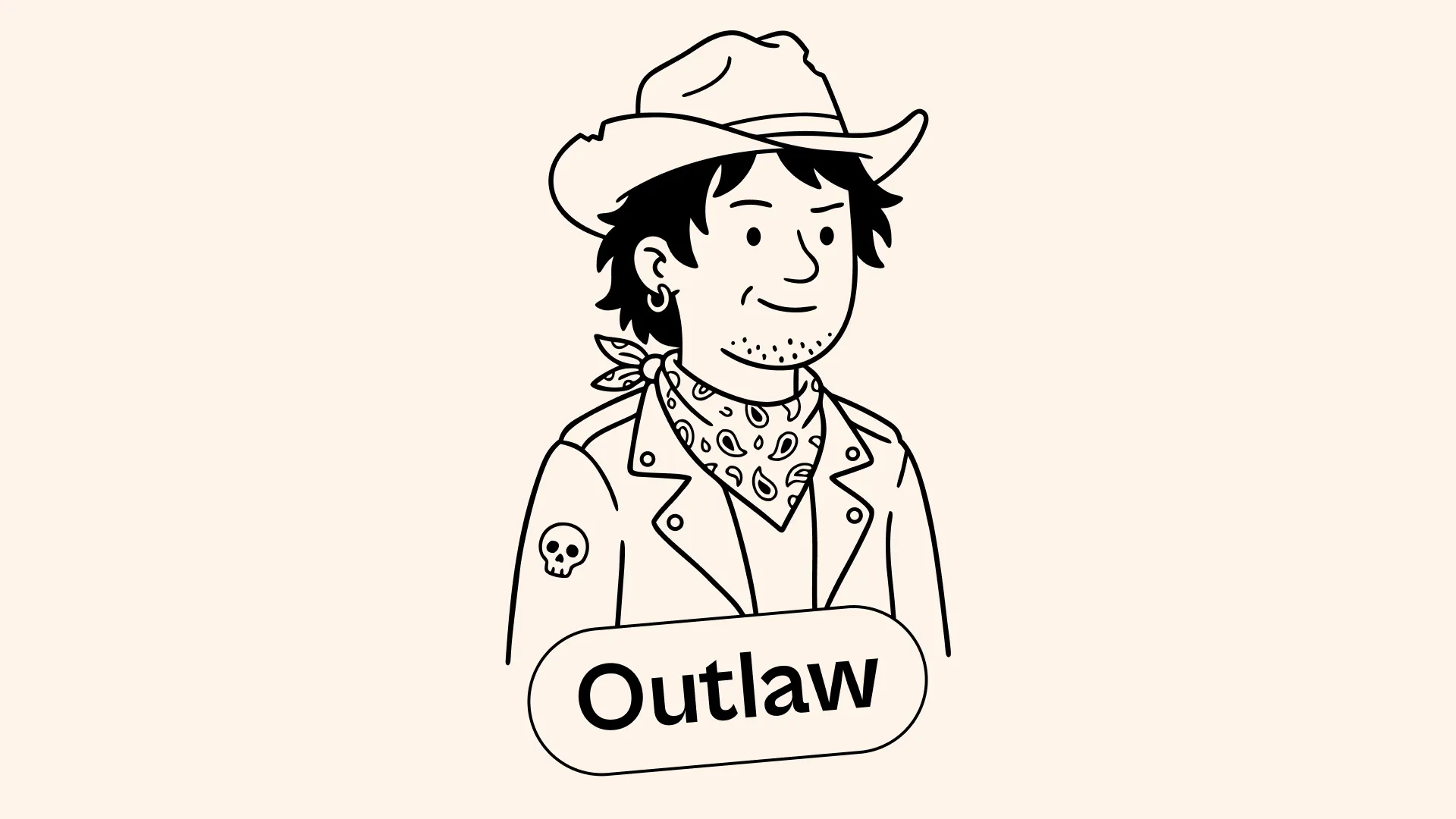
The rebel is the archetype that challenges rules and breaks the status quo. He often does not feel fully at home within existing systems and believes that real change is only possible by questioning established norms.
The core desire of the rebel is revolution or change. Rebels believe that rules are meant to be broken when they are unjust, limiting or outdated. They resist systems that restrict freedom or individuality and try to open up new paths.
Rebel brands appeal to people who do not want to conform. They encourage independent thinking and stimulate their audience to follow their own path. These brands are often bold, provocative and outspoken in their message. They stand for authenticity and dare to take controversial positions.
Freedom, autonomy and non-conformity: the values of the outlaw archetype
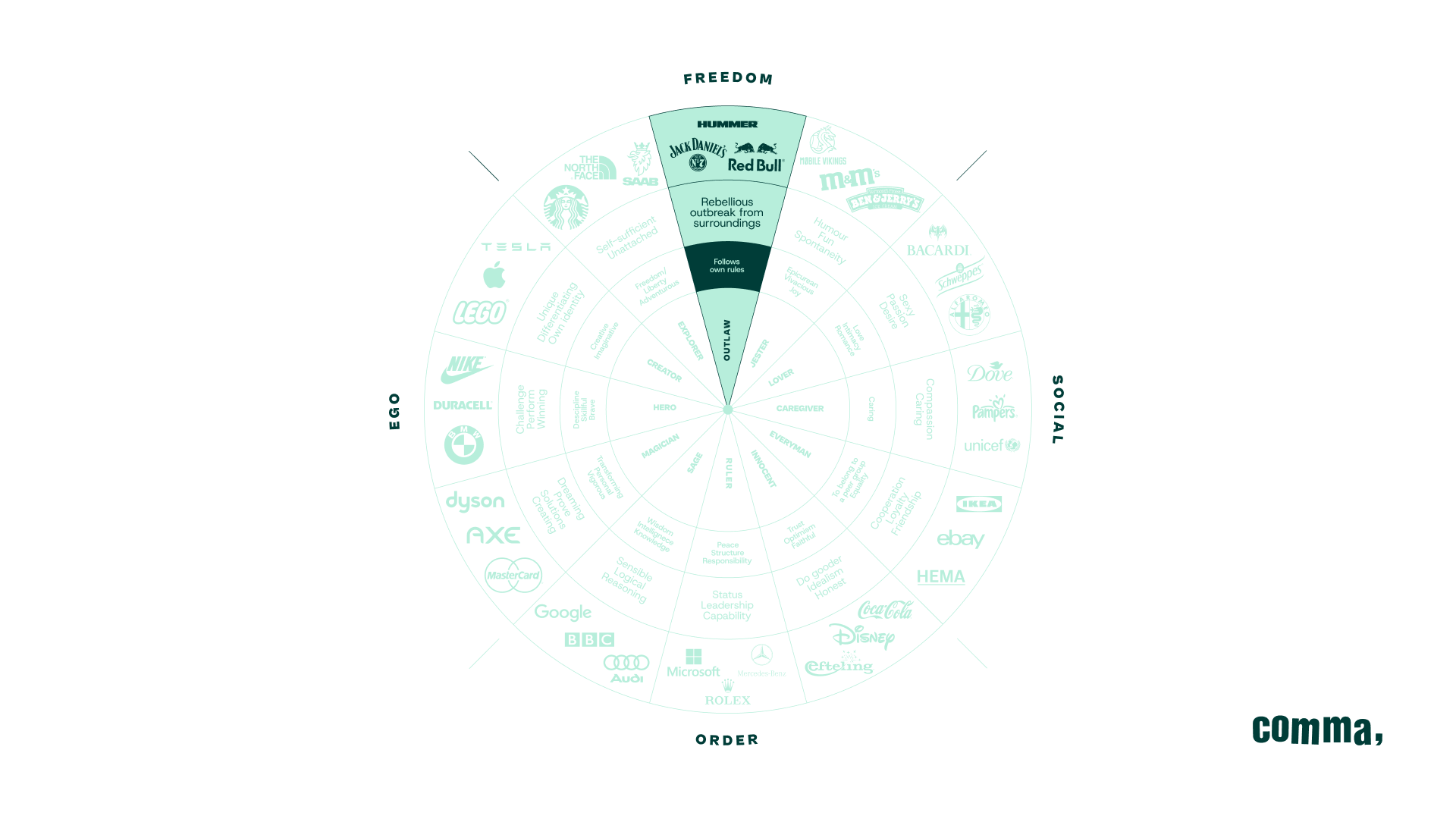
The rebel archetype revolves around freedom, non-conformity and challenging existing structures.
Important values include:
- Rebellion
- non-conformity
- freedom
- challenging the status quo
- personal power and autonomy
Advantages of the outlaw archetype: change and inspiration
Rebels bring energy and change. They inspire people to think critically and encourage them to push existing boundaries.
Strong qualities of this archetype are:
- an edgy and bold presence
- charisma and leadership
- the courage to take risks
- progressive and provocative ideas
- honesty and directness
Rebel brands are often associated with excitement, drive and intensity.
Disadvantages of the outlaw archetype: anger and aggressiveness
The strong focus on rebellion can also have negative effects. When the rebel goes too far, he can come across as aggressive or destructive.
Possible pitfalls are:
- alienating risk-averse customers
- negativity or anger as a driving force
- lack of boundaries
- illegal or destructive behavior
- a naïve worldview or fear of powerlessness
When rebellion becomes a goal in itself, the brand can lose credibility.
Visual identity of the outlaw archetype: color palette, typography and imagery
Rebel brands often have a raw, edgy and urban appearance that conveys rebellion and independence.
Color palette
Dark base colors such as black and graphite are combined with bright neon accents. Grey and metallic tones often create an industrial or urban look.
Typography
Typography is expressive and unconventional. Fonts may be rough, heavy or deliberately “unfinished” and often break traditional typographic rules.
Examples of suitable fonts: Murs Gothic, TrashHand, Impact
Composition and imagery
Layouts are often chaotic and unpredictable. They deliberately break traditional structure and use sharp lines, unexpected perspectives and visual tension.
Imagery often includes elements from street culture, punk or underground aesthetics. Typical characteristics are rough textures, torn or worn materials and grunge-like visuals.
Outlaw archetype family such as Jupiler
The rebel archetype often appears in sectors where individuality, strength and provocation are central.
Within this archetypal family, we find related roles such as:
- the activist: stands up for change and dares to speak out against what is wrong.
- the gambler: takes risks and consciously chooses uncertainty in order to change something.
- the maverick: follows their own rules and steps away from the crowd to follow their own path.
- the reformer: wants to improve existing systems and breaks through structures that no longer work.
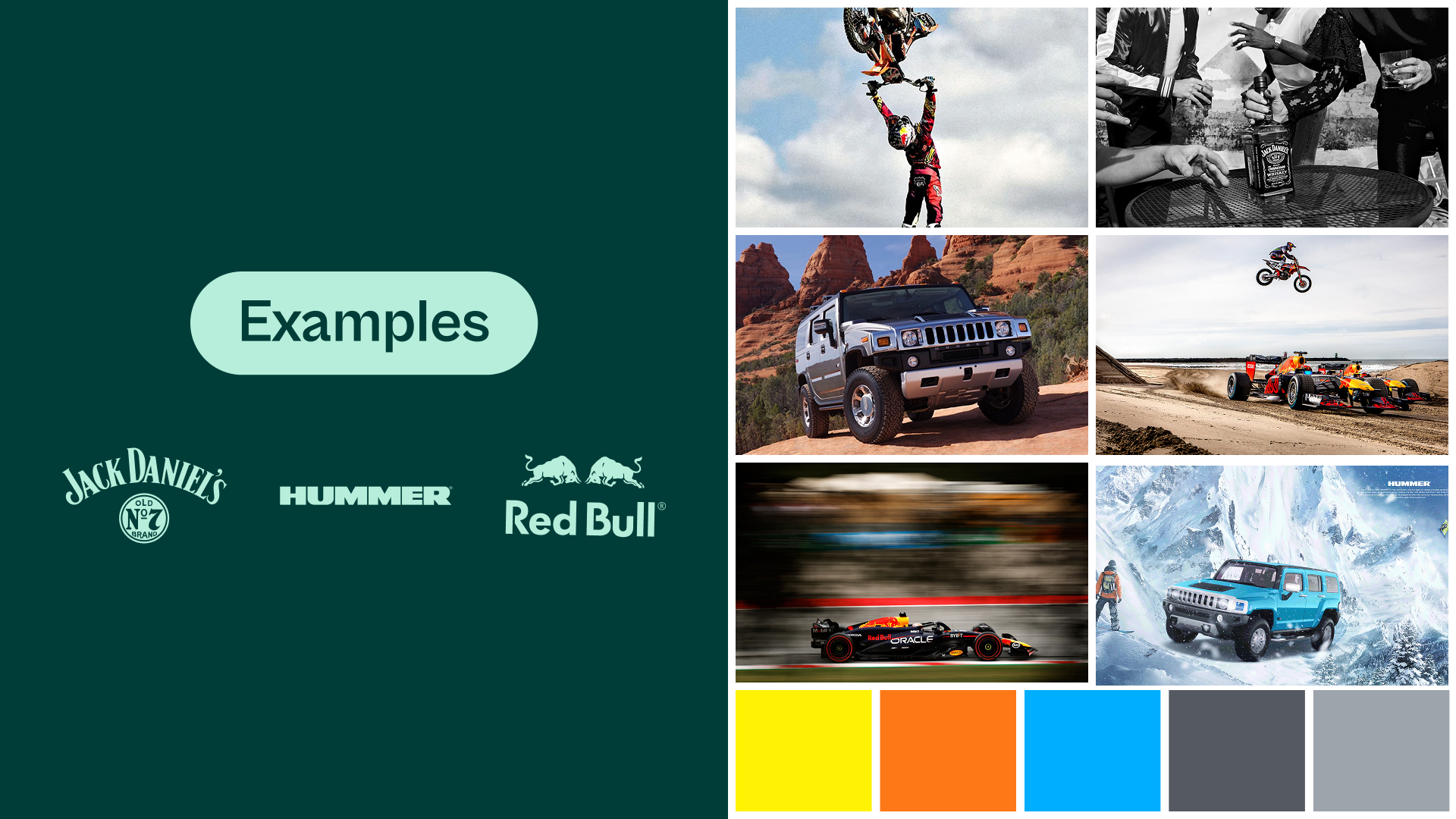
Well-known brands that represent the rebel archetype include:
- Red Bull
- Jupiler
- Jack Daniel’s
Communication Strategy
Would you like guidance on brand identity and communication style?