De vrijheid van het explorer archetype

De ontdekker is het archetype van vrijheid, avontuur en nieuwsgierigheid. Hij wil de wereld verkennen en nieuwe ervaringen opdoen. De ontdekker voelt zich niet thuis binnen strikte regels of grenzen en zoekt voortdurend naar nieuwe wegen en mogelijkheden.
Zijn kernverlangen is om zichzelf te ontdekken door de wereld te verkennen. Ontdekkers trekken eropuit, zowel letterlijk als figuurlijk. Ze bewandelen onbegane paden, zoeken nieuwe perspectieven en willen begrijpen wat er voorbij de horizon ligt.
De ontdekker is autonoom en onafhankelijk. Hij vertrouwt op zijn eigen kompas en volgt zijn nieuwsgierigheid. Voor hem draait het leven om ervaringen, vrijheid en groei. Ontdekker-merken inspireren mensen om hun comfortzone te verlaten en nieuwe mogelijkheden te ontdekken.
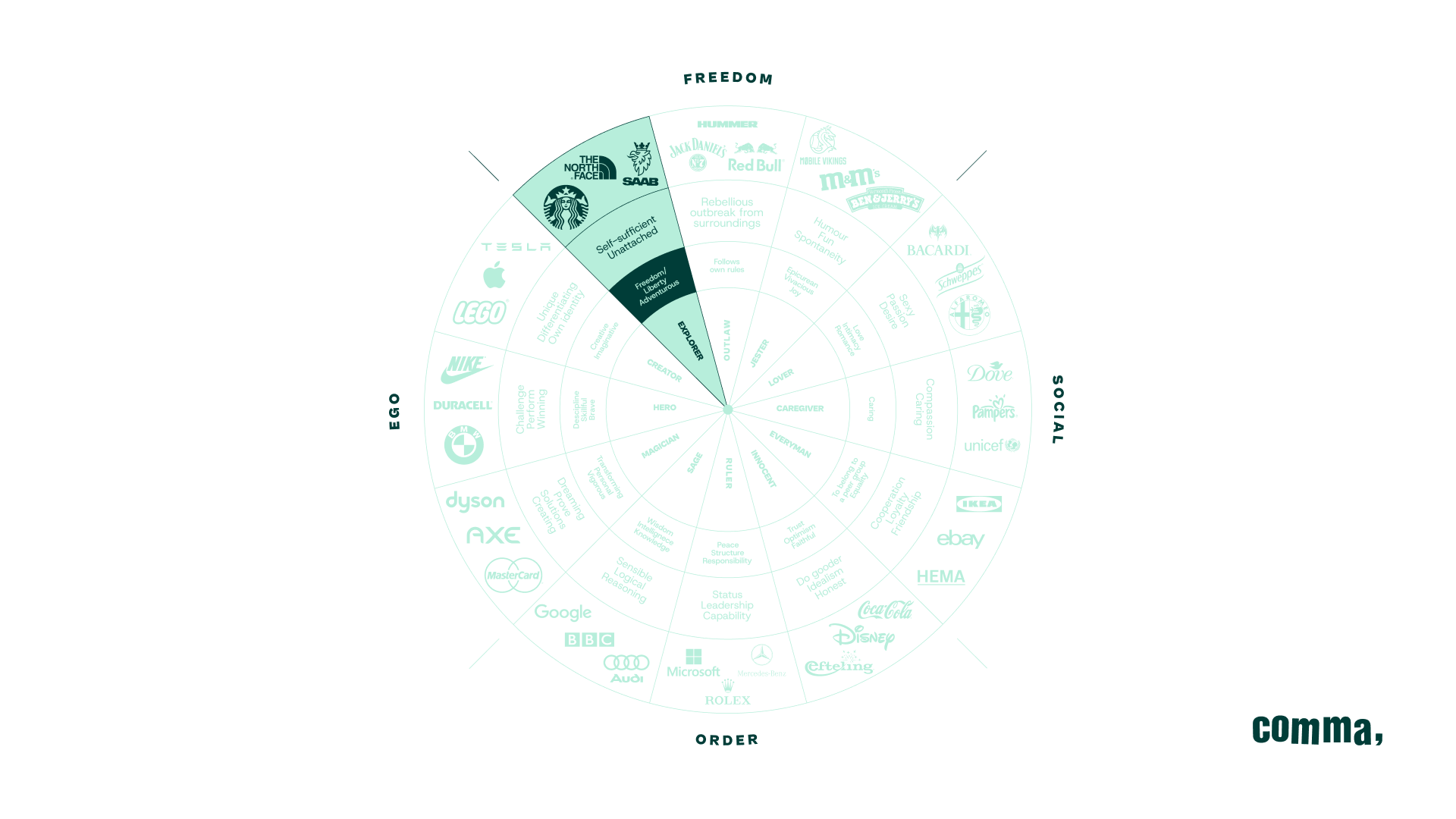
Autonomie, vrijheid en avontuur: de waarden van het explorer archetype
Het ontdekker-archetype draait om vrijheid, nieuwsgierigheid en het verlangen om nieuwe werelden te ontdekken.
Belangrijke waarden zijn:
- nieuwsgierigheid
- vrijheid
- ontdekking
- autonomie
- avontuur
Voordelen van het explorer archetype: enthousiast en nieuwsgierig
Ontdekkers inspireren mensen om verder te kijken dan hun huidige omgeving en nieuwe ervaringen op te zoeken. Ze moedigen aan tot onafhankelijk denken en persoonlijke groei.
Sterke eigenschappen van dit archetype zijn:
- avontuurlijk en nieuwsgierig
- authentiek en onafhankelijk
- moedig en zelfredzaam
- non-conformistisch
- inspirerend en enthousiast
De ontdekker helpt mensen hun horizon te verbreden en zich aan te passen aan een veranderende wereld.
Nadelen van het explorer archetype: rusteloos en vervreemding
De sterke drang naar vrijheid en ontdekking kan er ook toe leiden dat de ontdekker rusteloos of moeilijk te binden wordt.
Mogelijke valkuilen zijn:
- te individualistisch overkomen
- rusteloosheid of voortdurend zoeken
- moeilijk ergens blijven of zich vestigen
- doelloos rondzwerven
- vervreemding van anderen
Wanneer de ontdekker te veel gefocust raakt op vrijheid, kan richting of stabiliteit verloren gaan.
Visuele identiteit van het explorer archetype: kleurenpalet, typografie en beeldtaal
Ontdekker-merken hebben vaak een natuurlijke en avontuurlijke uitstraling die vrijheid, beweging en ontdekking benadrukt.
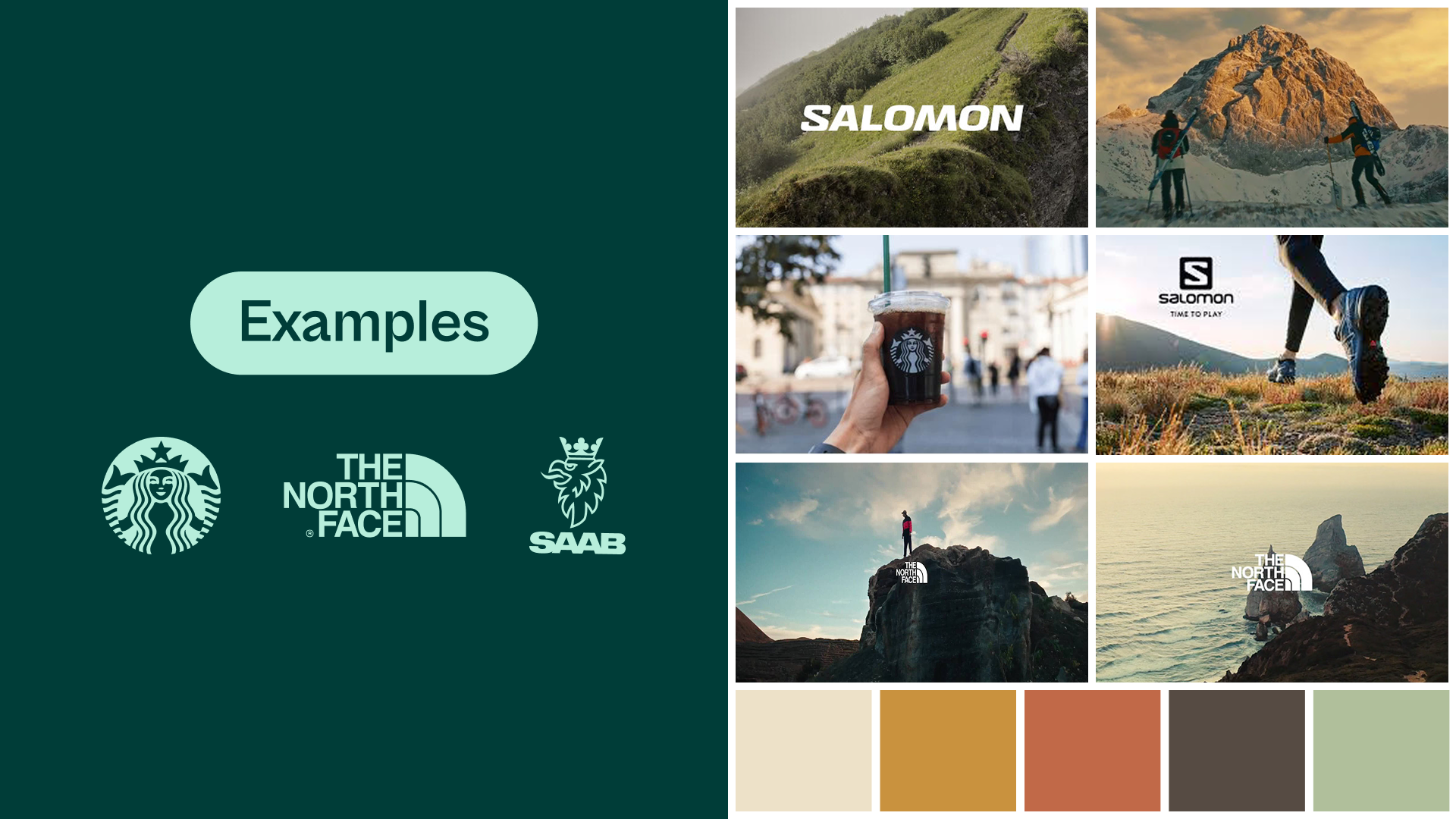
- Kleurenpalet
- Natuurlijke kleuren geïnspireerd op aarde, lucht en water, zoals oker, terracotta, groen, zandkleur, hemelsblauw en kobaltblauw. Kleuren worden vaak zacht gelaagd of licht vervaagd om een zonverbleekt, organisch effect te creëren.
- Typografie
- Eenvoudige, functionele lettertypes zoals moderne sans-serifs of monospace fonts. Soms gecombineerd met handgeschreven accenten of typografie geïnspireerd op oude kaarten en reisdagboeken.
- Voorbeelden van geschikte fonts: Circular Std, Marcin Antique, Neubau Neue Haas Mono, Grotesk Stencil
- Compositie en beeldtaal
- Layouts bevatten vaak veel witruimte en suggereren beweging of een reis. Elementen zoals kaarten, routes, pijlen, horizonlijnen en reisdetails worden regelmatig gebruikt.
- Beeldmateriaal toont vaak een individuele reiziger en landschappen zoals bergen, woestijnen, bossen en open wegen. Rugzakken, tenten, kompassen en reisdagboeken versterken het gevoel van avontuur en vrijheid.
Explorer archetype familie zoals Jeep en National Geographic
Het ontdekker-archetype komt vaak voor in sectoren die verbonden zijn met avontuur, reizen en ontdekking.
Binnen deze archetypische familie vinden we verwante rollen zoals:
- de adventurer: zoekt actief naar nieuwe ervaringen en gaat graag buiten de gebaande paden.
- de generalist: verkent verschillende domeinen en wil breed begrijpen hoe de wereld werkt.
- de pioneer: baant nieuwe wegen en durft als eerste onbekend terrein te verkennen.
- de seeker: is voortdurend op zoek naar betekenis, vrijheid en persoonlijke groei.
Bekende merken die het ontdekker-archetype vertegenwoordigen zijn onder andere:
- The North Face
- Jeep
- National Geographic
- Nikon
- Salomon

Communicatiestrategie
Wilt u begeleiding rond brand identity en communicatiestijl?